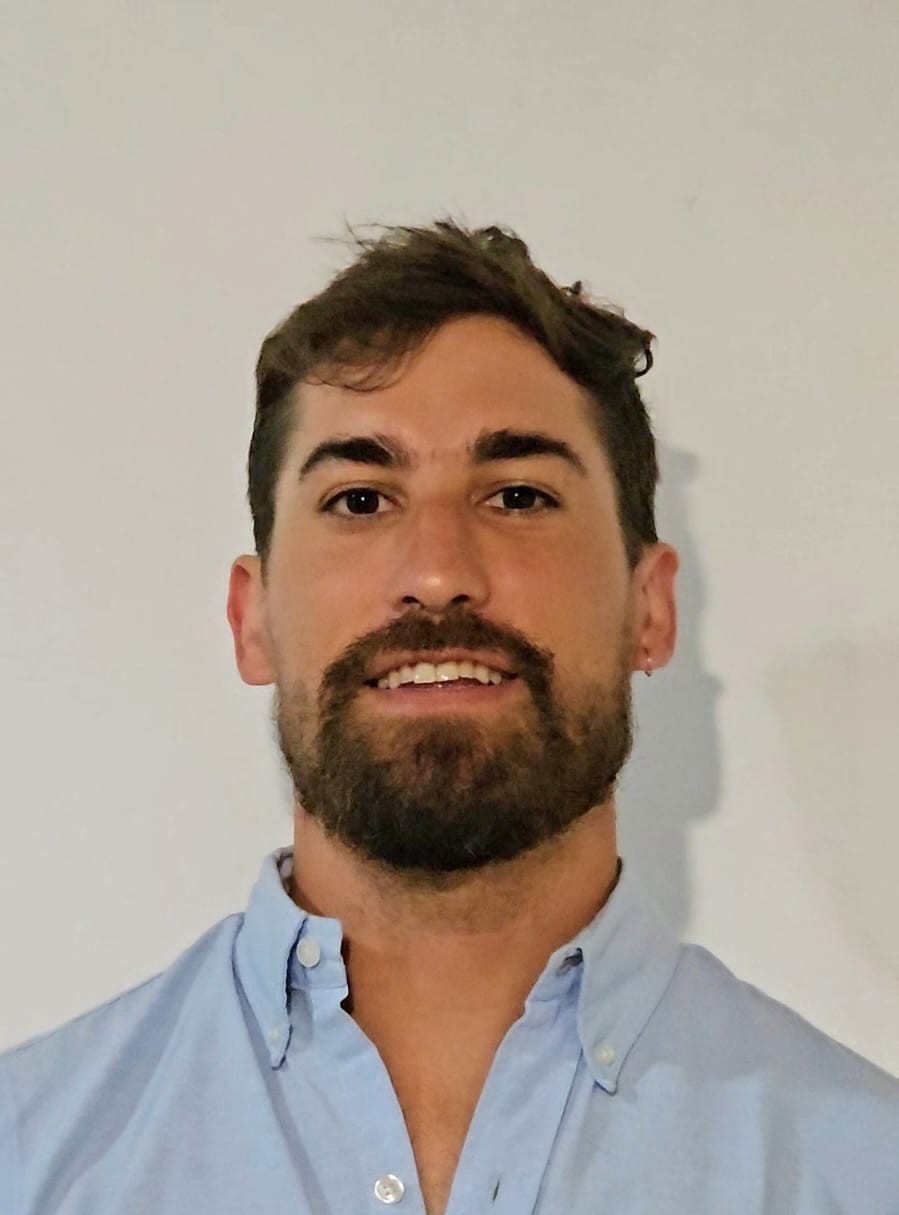


Dr Lucas Gonzalez
Department
Post Doctoral Researcher
LOCATION
Argentina
BIO
I was born and raised in a beef cow-calf and dual-purpose ovine flock farm in the Southwest of Buenos Aires Province, Argentina, where I developed an early interest in livestock husbandry. I earned an Ag. Eng. degree from the National Southern University (Argentina). As undergraduate student, I completed a 6-mo academic exchange at the Autonomous University of Chiapas (Mexico). Also, I completed an internship at the Forage Production Department of the National Institute of Agricultural Technology (INTA; Bordenave Experimental Station) which sparked my interest in researching. My undergraduate thesis identified a novel high-starch, low-fiber, and high-yielding barley cultivar whose whole-plant silage increased the digestible dry matter yield per hectare. Afterwards, I joined the Animal Production Department at the General Villegas Experimental Station of INTA. Recently, I completed my PhD program at the University of Buenos Aires (Argentina). My doctoral studies (i) explored the nutritional value of maize grains from contrasting origins as ruminant feedstuff, (ii) determined the microbial rumen degradable protein (RDP) needs on steers fed maize-based finishing diets, and (iii) improved gain-to-feed, carcass yield, and nutrients digestibility, unaffecting nitrogen excretion, of steers fed semi-dent, maize-processed, RDP-balanced diets. As part of my doctoral training, I completed a 3-mo visit to the North Florida Research and Education Centre of the University of Florida in Marianna (USA) as a Fulbright scholar. Nowadays, I am investigating opportunities for methane sensing and destruction on animal- and on barn-basis as post-doctoral fellow at Lincoln University. My research interests include ruminant nutrition, feedstuffs nutritional value evaluation, and sustainable ruminant production to reduce N excretion and emissions footprint.
PROJECTS
No items found.