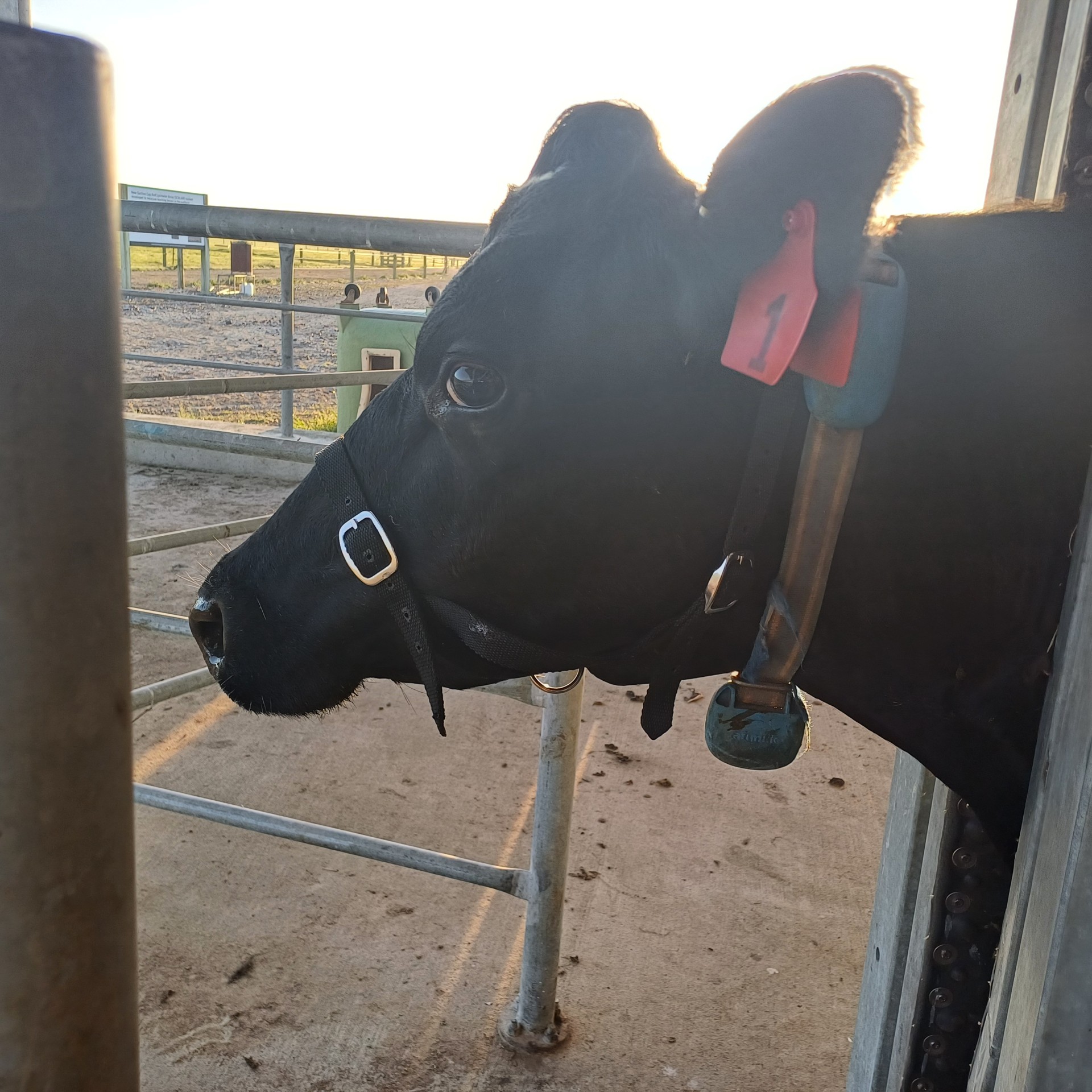

Accurate methods for monitoring methane emissions are needed to adopt mitigation strategies. However, most of the sensing techniques are labour-intensive, short-term, time-consuming,non-scalable, highly expensive, or disrupt the normal animal behaviour. Livestock wearable halter-like devices may be economical, simpler, scalable,mid-to-long-term, and less-intrusive technologies. The main goals of this preliminary project are: (i) to refine the design of a wearable halter-like device to improve the fit and comfort of a current prototype and ii) to validate our hypothesis that the animals can become accustomed to wearing the device without interfering with their normal activities. Therefore, we aim to explore animal behaviour and welfare after an acclimatising period to wear the device. If the hardware is demonstrated not to alter natural animal behaviour, we will evaluate the efficiency of the design to collect gas flow during burp events and hence determine the methane capture efficiency of the device. The outcomes will contribute to develop local, economical, and farm scalable sensing solutions to adopt methane mitigation strategies on grazing systems.